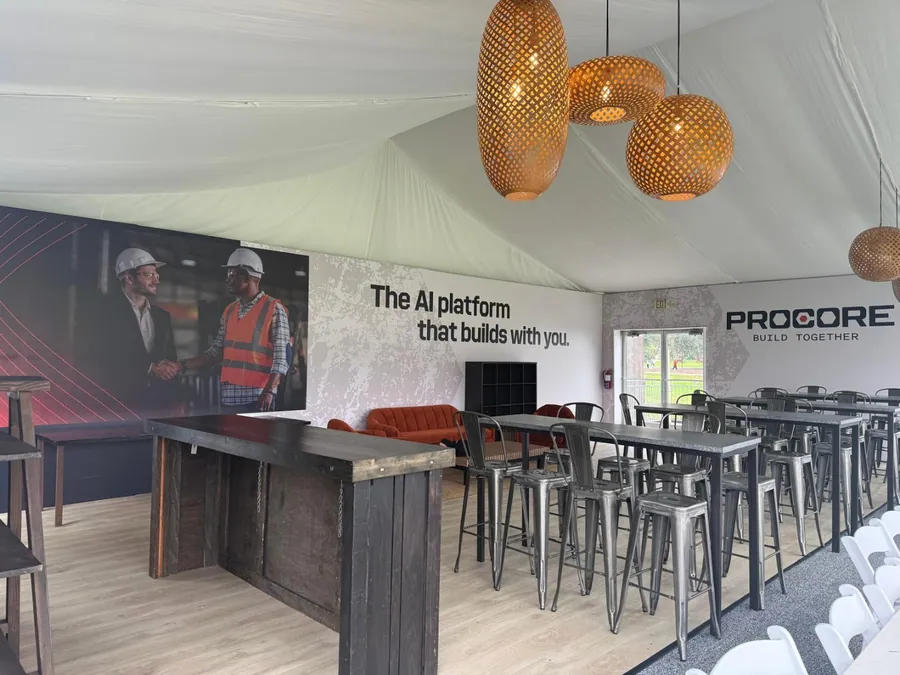
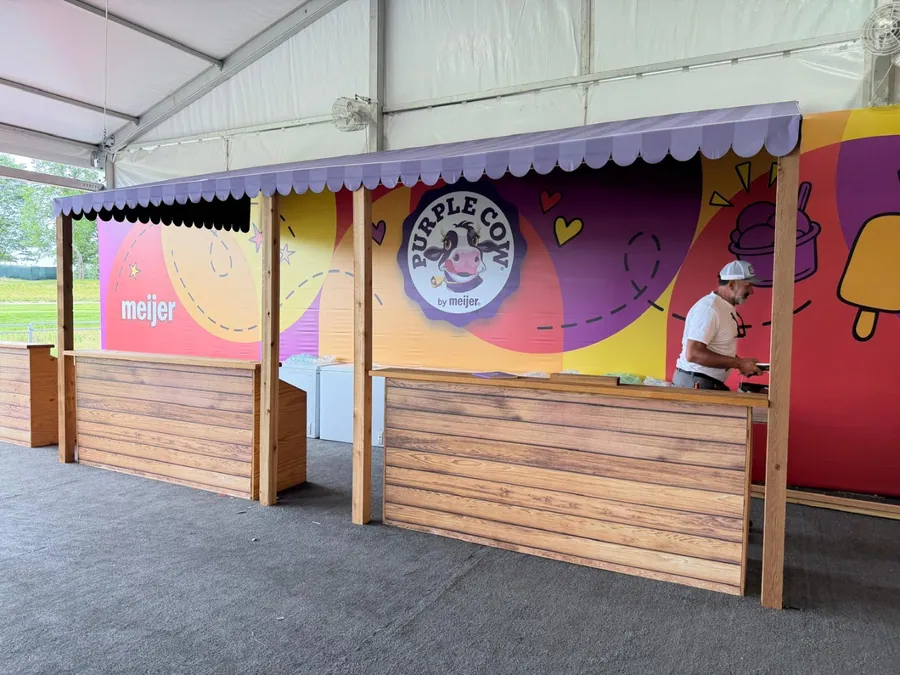
Start with the goal, not the structure
Before anyone sketches a counter or a canopy, agree on what the activation has to do. Is it sampling a product, collecting sign-ups, launching a new look, hosting VIP guests or giving a sponsor a photo moment? Each goal points to a different layout.
Write down three things: who the guests are, what you want them to do, and how you will know it worked. Those answers decide everything that follows.
Plan the footprint as a guest journey
Walk the space the way a guest will. The best activations treat the whole footprint as one story with three parts:
- Approach: what people see from a distance. Height, color and lighting pull them in, so tall elements such as towers, blade signs and dimensional letters belong here.
- Engagement: what they touch and do. Counters, sampling stations, demo areas and screens need room for a line and for staff to work.
- Exit: what they take away. A photo moment, a giveaway or a sponsor wall gives guests a reason to share the experience.
Mark entries, exits, power, water and any venue restrictions on the floor plan early. A beautiful layout that blocks a fire lane will not survive the site walk.
See it before it is built
Renderings are where the story comes together. A layout shows how guests move; elevations and photo-real renderings show the environment with your branding applied, so every decision maker reviews the same picture.
Collect feedback in one round where you can. One consolidated review with marketing, the sponsor and the venue saves weeks compared with several partial ones.
Keep the brand consistent across every surface
A cohesive activation uses the same colors, type and tone on every piece: the arrival corridor, the counter fronts, the menu boards, the staff aprons and the giveaway bags. Inconsistent pieces make the whole thing look assembled rather than designed.
Send current brand standards, logo files and color values at the start. Print is sized to the finished build, not to the drawing, so graphics fit the first time.
Build for the real site
Indoor ballrooms, outdoor lawns, tents and street fronts each bring different rules. Shop drawings resolve door widths, floor loading, ground anchoring, wind ratings and fire codes before fabrication starts.
If the activation will travel to several markets, say so on day one. A modular build that breaks down, ships and reassembles costs less over a tour than a one-off rebuilt in every city.
Plan the people, not just the pieces
An activation is only as good as the people running it. Plan staff positions, storage for product and giveaways, a back-of-house area out of sight, and how lines will form at peak times. Lighting matters too: an activation that looks great at noon can disappear after sunset.
Install, support and remove
Every piece should be pre-assembled and checked at the warehouse before it ships, so problems are found in the shop rather than on site. On site, structures go in first, then walls and counters, then graphics, furniture and lighting.
Keep a small crew available during the event for weather and wear, and plan removal so the venue is handed back clean and reusable pieces return to inventory.
A quick planning checklist
- Goal, audience and how success will be measured
- Floor plan with power, water, access and venue rules
- Guest journey: approach, engagement and exit
- Renderings reviewed in one consolidated round
- Brand standards, logo files and color values sent at kickoff
- Site constraints resolved in shop drawings
- Modular build if the activation will travel
- Staffing, storage, back of house and lighting
- Warehouse pre-fit, installation, event support and removal
For timing, see our custom event build timeline: a branded activation or pop-up environment typically needs eight to twelve weeks from brief to install. To talk through your activation, visit our brand activations page or contact us.