What "fabrication" means in an activation
When planners search for brand activation fabrication, they usually mean one of four things, and most activations need all four:
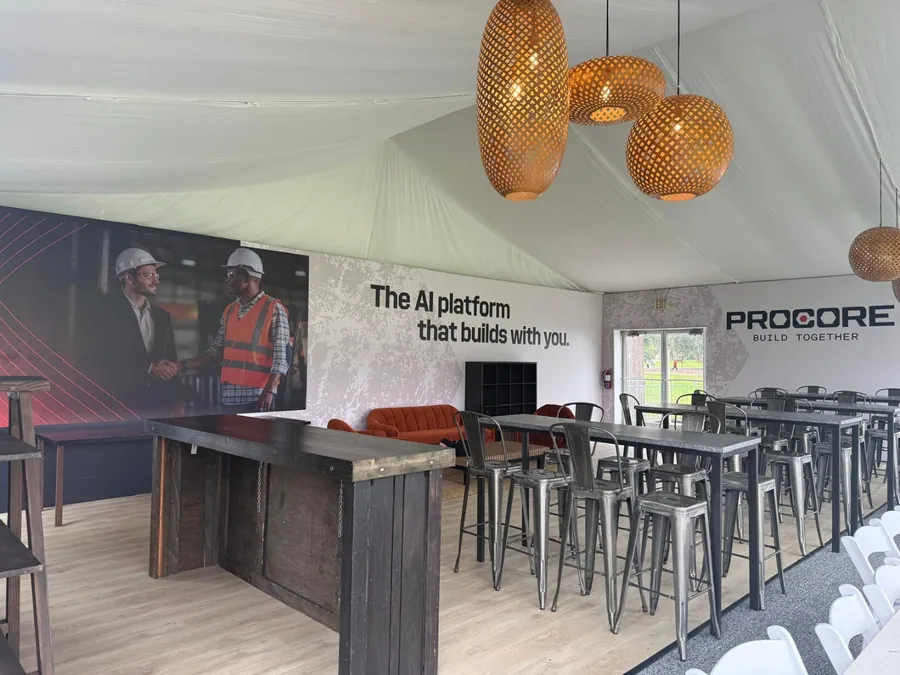
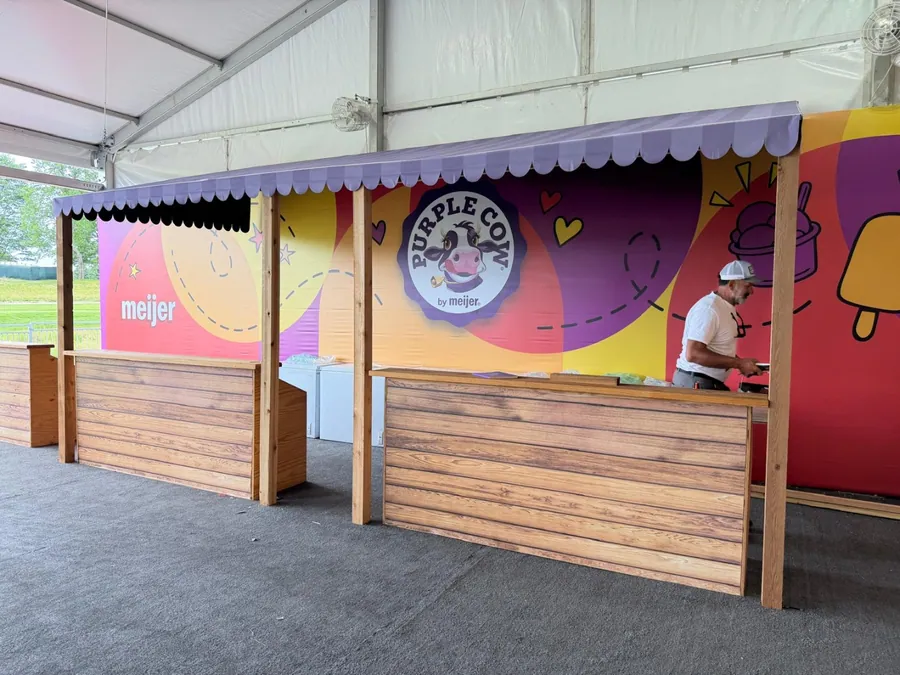
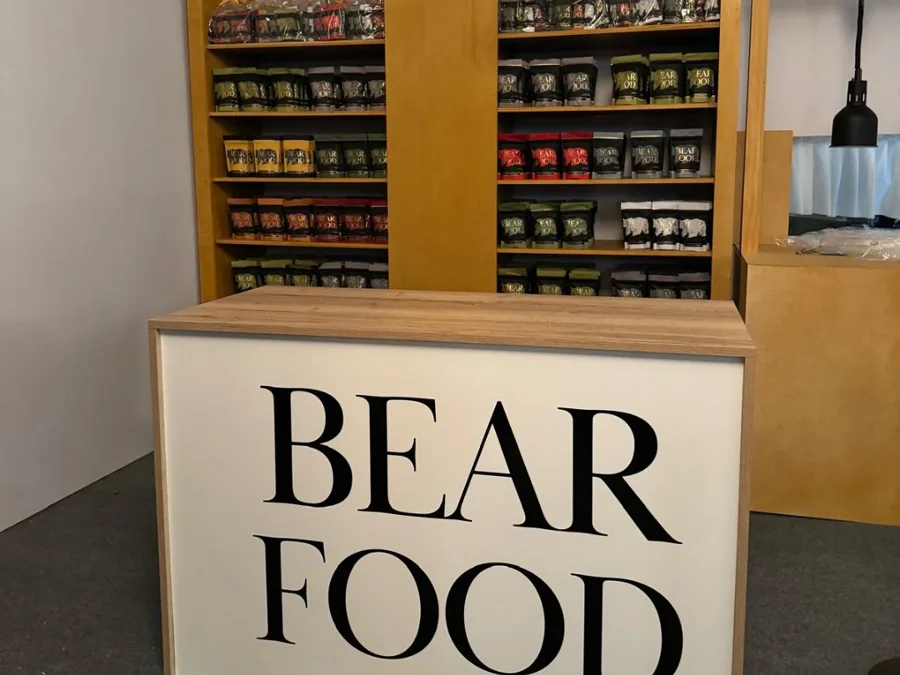
- Structures: counters, bars, towers, arches, blade signs, sponsor walls and pop-up shop fronts. These carry the weight, hold the lighting and define the footprint.
- Finishes: paint, laminate, wood veneer, acrylic, metal cladding, greenery and fabric. Finishes are what guests see up close, so they are specified separately from the structure underneath.
- Graphics: printed vinyl, fabric tension graphics, dimensional letters and backlit panels, sized to the finished build rather than to the drawing.
- Props and dimensional pieces: oversized products, logos and shapes, usually carved from EPS foam and hard-coated so they survive a tour.
A fabricator who handles all four under one roof can resolve the joints between them, so the graphic fits the counter and the counter fits the tent.
The materials behind most builds
Almost every activation structure comes down to a short list of materials, chosen for weight, finish and how many times the piece has to go up and down.
- Plywood and MDF for counters, display walls and shop fronts. Fast to build, takes any finish, and heavy enough to feel permanent.
- Aluminum and steel framing for towers, truss, arches and anything that needs a wind rating or has to carry screens and lights.
- Acrylic and polycarbonate for lit panels, product shelves and anything that needs to glow.
- EPS foam with a hard coat for oversized shapes and letters: light enough for two people to carry, tough enough to be touched all day.
- Fabric and tension systems for large backdrops and canopies that have to pack small.
The right answer depends on the venue. A ballroom build can be heavier and more finished; an outdoor street activation needs weight at the base, a wind rating and finishes that shrug off rain.
How a concept becomes a crate
The build process is the same whether the piece is a six-foot counter or a two-story tower:
- Technical drawings. The rendering is redrawn as shop drawings with real dimensions, materials, joints, power and weight. This is where door widths, floor loading and fire codes get solved.
- Sectioning. Every piece is divided into sections that fit through the venue door, into a truck and onto a pallet. Section lines are hidden in the design, not added afterward.
- Fabrication. Framing first, then skins and finishes, then hardware for lighting and screens. Graphics are printed once the finished sizes are confirmed.
- Pre-fit in the shop. The whole activation is assembled in the warehouse, lit, photographed and checked against the rendering. Problems are fixed in the shop, not on site.
- Crating and labeling. Each section is labeled with its position and the order it goes in, so the install crew builds from a map.
How long fabrication takes
From an approved rendering, most custom activation builds need four to eight weeks in the shop, plus print, shipping and install. Modular, repeatable pieces sit at the short end; multi-story structures, integrated technology and touring builds sit at the long end. Rush builds are possible, but they trade money and finish quality for time.
Working backward from an event date, a comfortable schedule looks like this:
- 10 to 12 weeks out: concept and rendering approved
- 8 weeks out: shop drawings signed off, materials ordered
- 4 to 8 weeks out: fabrication
- 2 weeks out: pre-fit, graphics applied, crating
- Event week: ship, install, open
Our custom event build timeline walks through the whole calendar, including approvals and removal.
What drives the cost up or down
Two activations with the same footprint can cost very different amounts. The things that move the number most:
- Size and height. Tall structures need engineered framing, ballast and sometimes a permit.
- Finish level. Painted plywood is quick; real wood veneer, backlit acrylic and metal cladding take longer and cost more per square foot.
- Custom versus modular. A one-off piece is built from scratch. A modular system reuses frames and swaps graphics, which costs more the first time and much less on every event after.
- Technology. Screens, lighting control and power distribution add hardware, cabling and an electrician on site.
- Site conditions. Outdoor, uneven ground, union venues, limited load-in windows and overnight installs all add crew hours.
- Travel. If the activation tours, crating quality and reassembly time matter more than the first build cost.
The cheapest change you can make is deciding early. Changes after shop drawings are approved cost more than the same decision made a week sooner.
Pop-up shops and retail activations
Retail activations have their own rules. A pop-up shop needs a cash wrap, secure storage, product display that can be restocked from behind, and lighting that makes the product look good rather than the structure. Counters are built at retail height, shelves are rated for real product weight, and the whole thing is designed to be struck and rebuilt in another city in a day.
See our retail and pop-up shop build-outs for how temporary retail and permanent store fixtures overlap.
How to brief a fabricator
The fastest way to a good quote is a complete brief. Send:
- The rendering or concept, even if it is rough
- Venue name, indoor or outdoor, and the floor plan with power marked
- Event dates, load-in and load-out windows
- How many times the piece will be used, and where it travels next
- Brand standards, logo files and color values
- Anything that must be a specific material, and anything that can be substituted
- Who approves drawings, and how fast
With that in hand, a fabricator can price the real build instead of guessing at it, and the first quote is usually the final one.
A quick fabrication checklist
- Structure, finish, graphics and props listed separately
- Materials chosen for the venue, not just the rendering
- Shop drawings approved before anything is cut
- Sections sized to the venue door and the truck
- Pre-fit and photographed in the shop
- Crates labeled in install order
- Modular if the activation will travel
For the planning side, read how to plan a brand activation that feels like one story. To talk through a build, visit our brand activations and custom fabrication pages, or contact us.